Find the gap. Build the idea. Prove it clicked.
Manthika turns one topic into a short, adaptive climb. It starts where the learner is, uses their own AI for small investigations, and only calls an idea mastered when they can use it for themselves.
In the lesson itself, that is just three steps: Find your level · Practice · Complete.
Start at the right rung
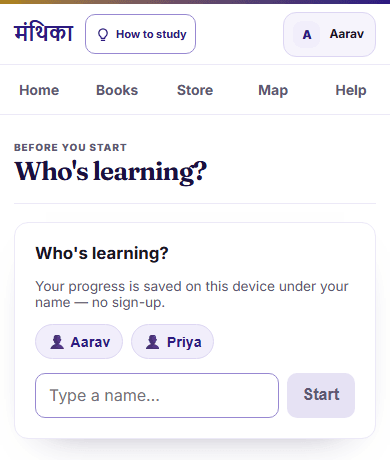
No account or setup. The learner picks their name and answers four quick questions. Each angle is marked solid, shaky, or not yet, so the lesson can skip what they know and begin at the first real gap.
“An app guesses a house’s price from its size. Is the output a number, a group, or a picture?”
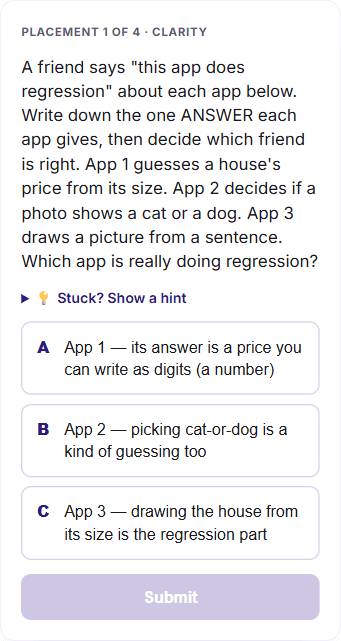
Build one idea from five angles
The app serves one card at a time and always works on the lowest shaky angle. If an advanced question exposes a weak foundation, the path quietly drops back and repairs it.
Use AI, then think past it
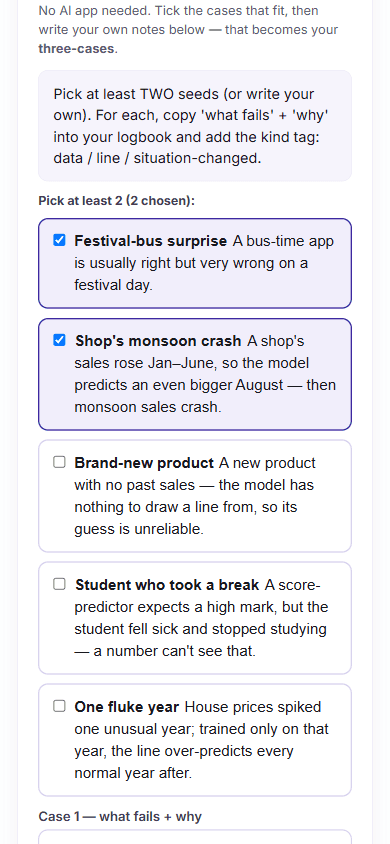
Some cards send the learner to the AI their family already uses; others provide seed cases inside the lesson. Either way, they bring examples back and answer follow-ups about their own work.
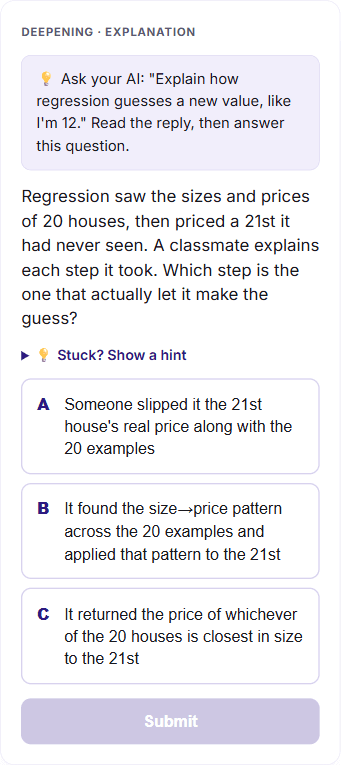
“Ask your AI: Explain how regression guesses a new value, like I’m 12.”
Because the next question refers to their examples, copying a generic chatbot answer is not enough. The AI conversation stays outside Manthika. Pasted notes stay on the phone unless the learner signs in; then they sync with the rest of their progress.
Two useful finish lines
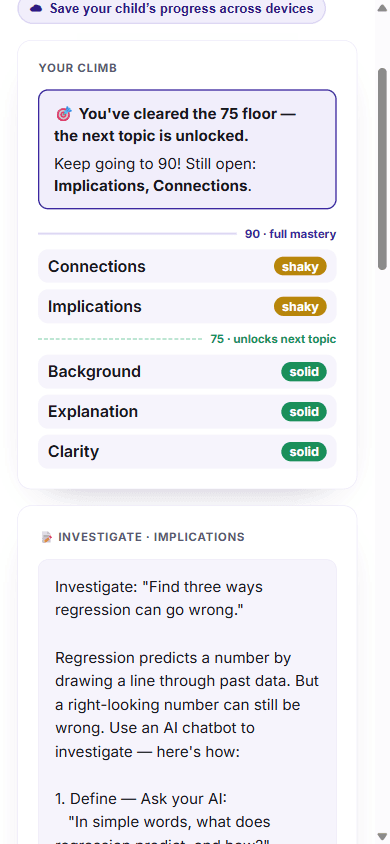
At 75, the three core angles are solid and the next topic unlocks. At 90, all five are solid and the learner has applied the idea to a new case. Facts let them move on; transfer proves mastery.
If the same gap stays stuck, the app pauses kindly, saves progress, and invites the learner to reread the exact book page before returning.
A confident learner can move quickly to 90. A struggling learner gets a shorter path, retries at the foundation, and stops before frustration takes over.
All the forms it has today
No chapter exists yet in every form the factory can make. This is the one that has reached the most: the same Class 10 Mathematics chapter, written once, shown below in each form it has reached so far.
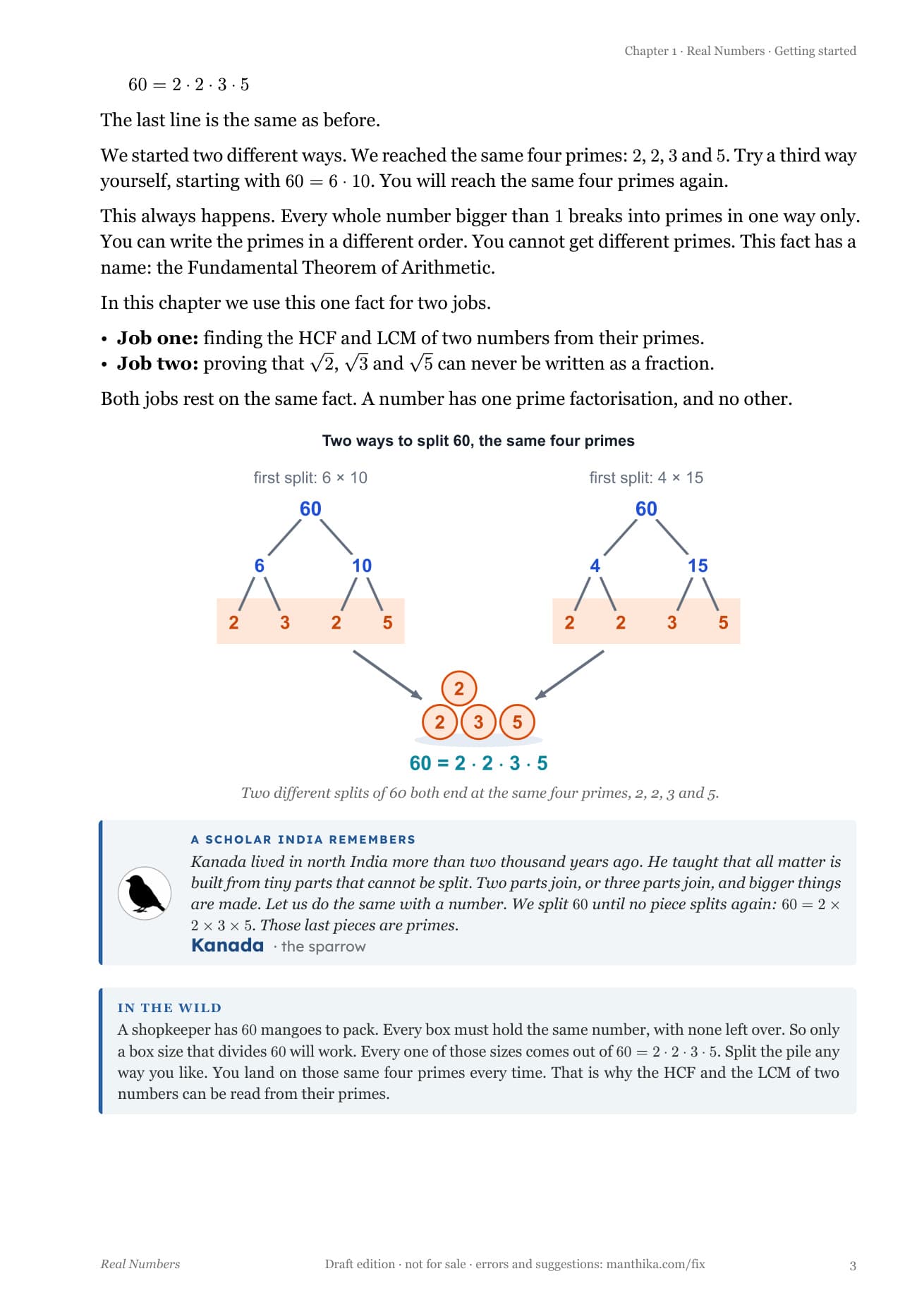
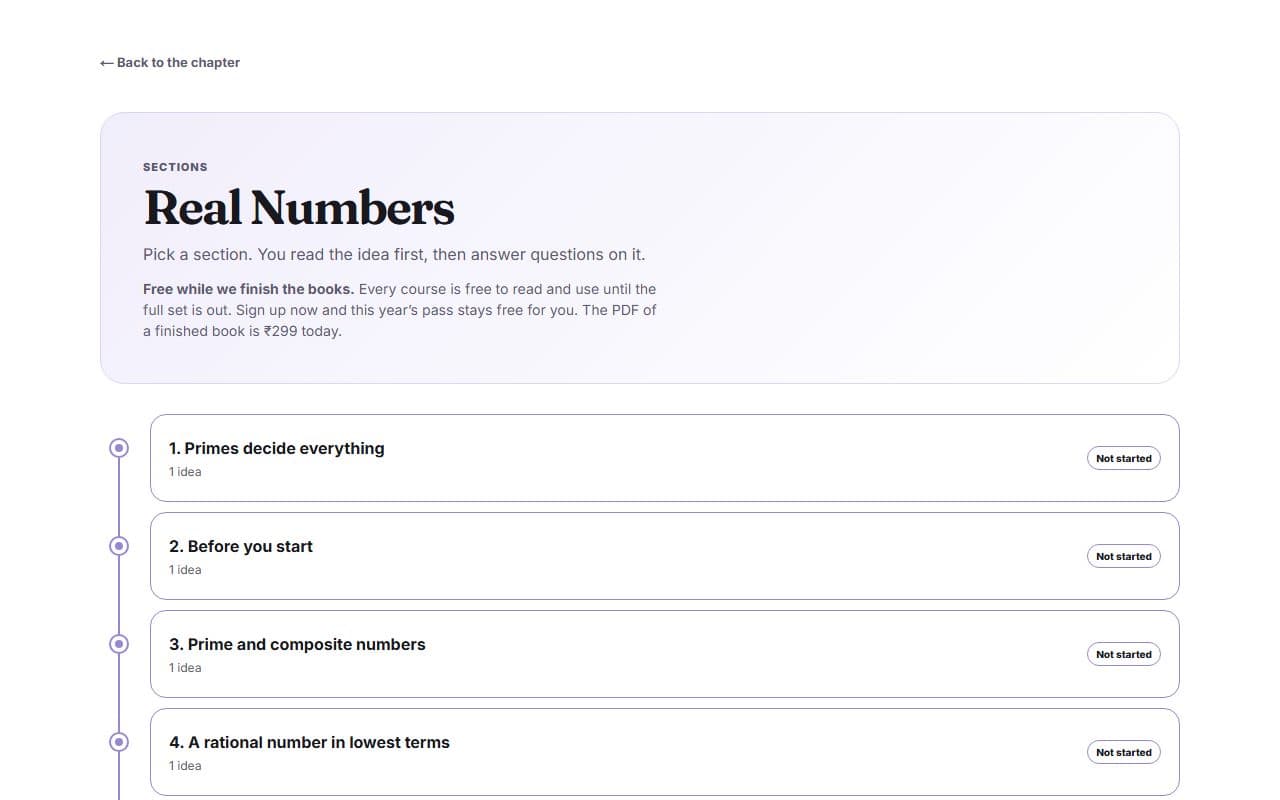
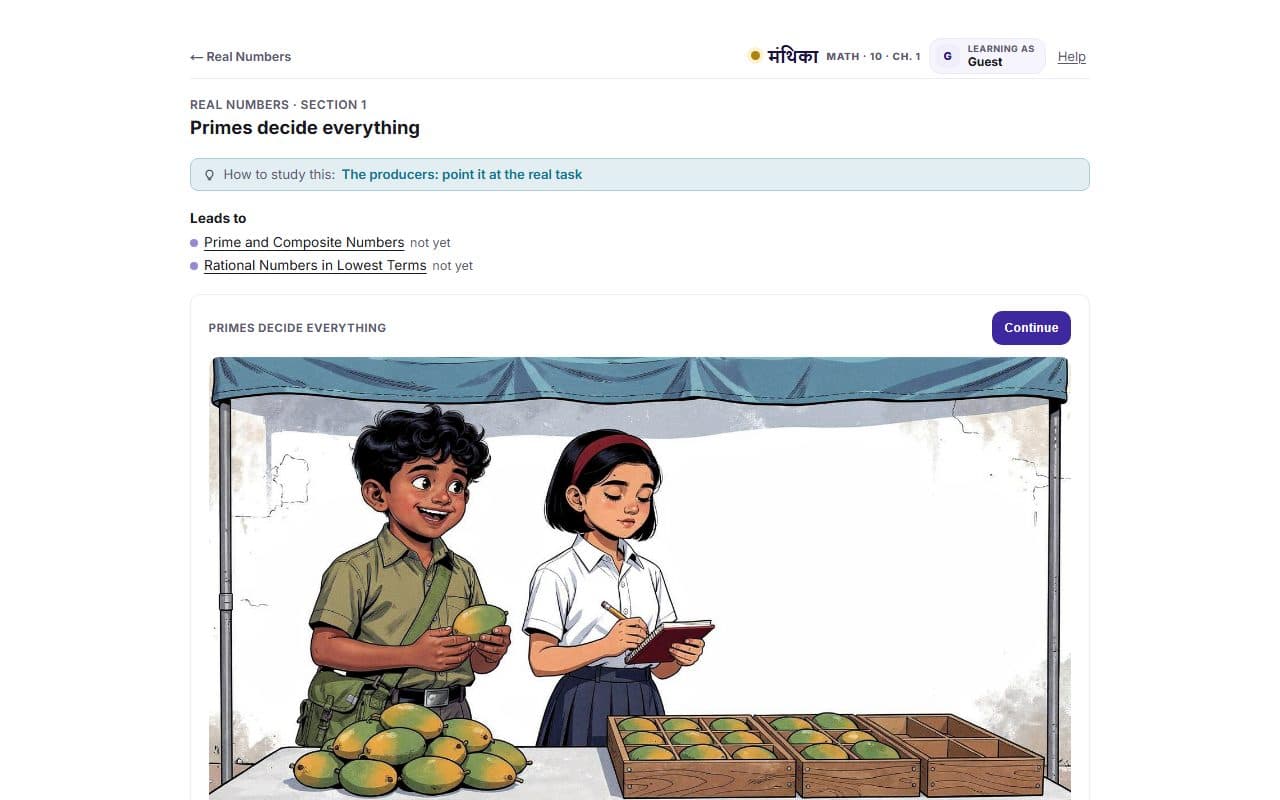
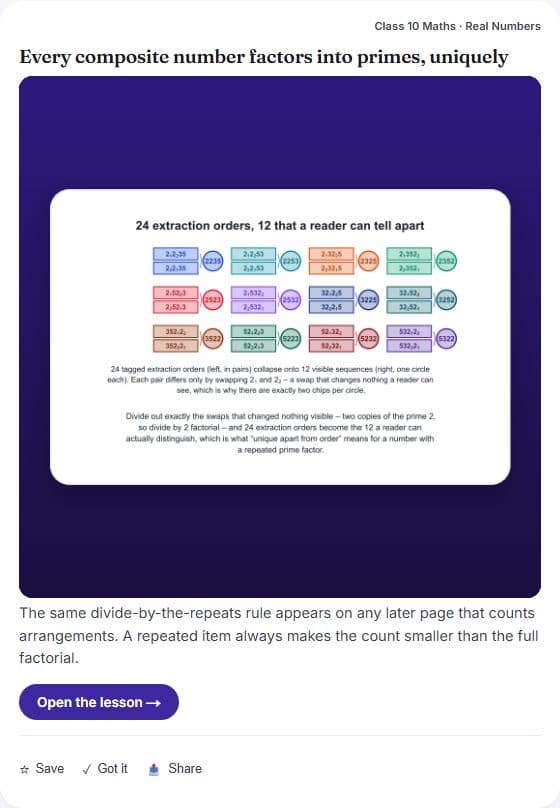
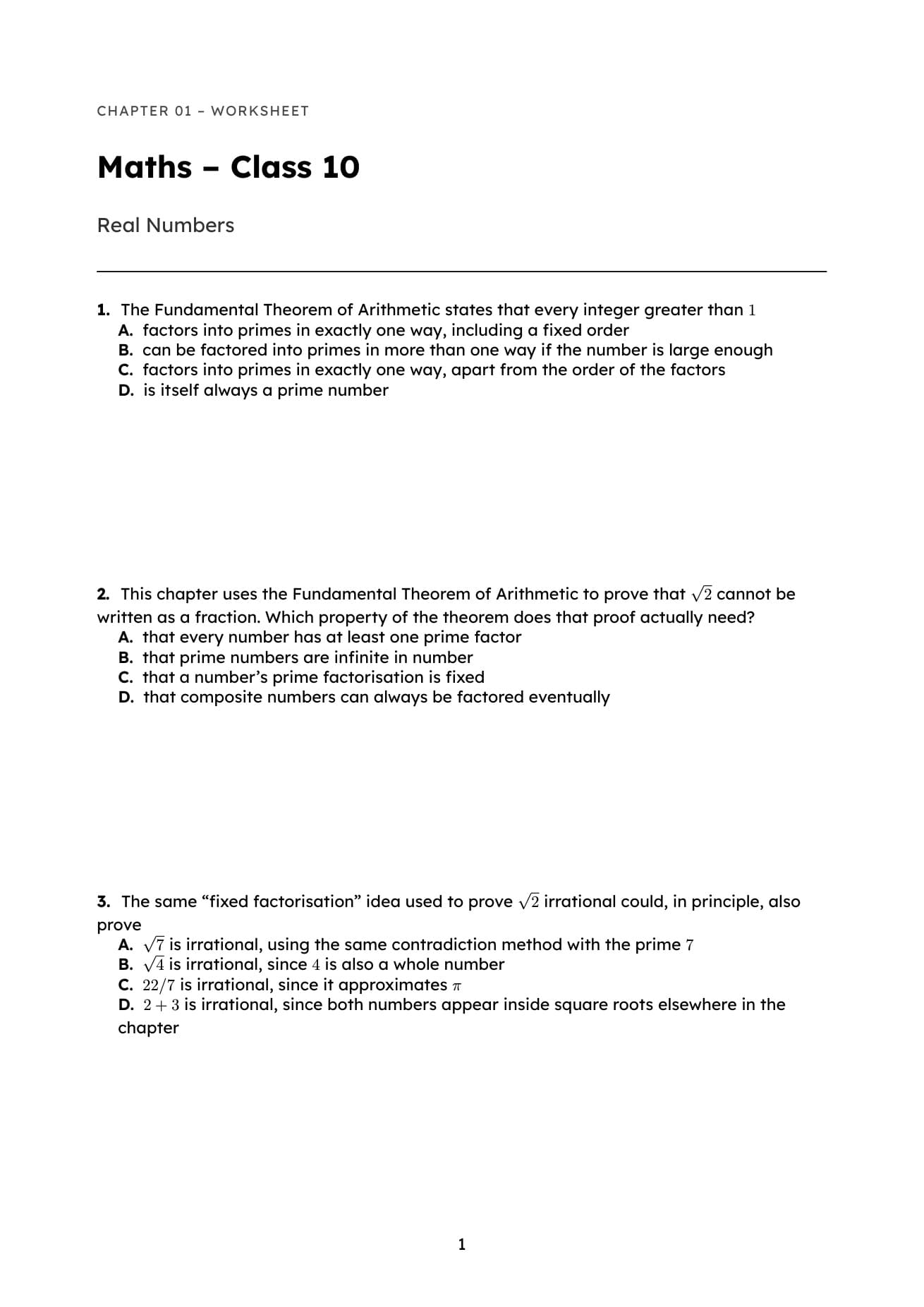
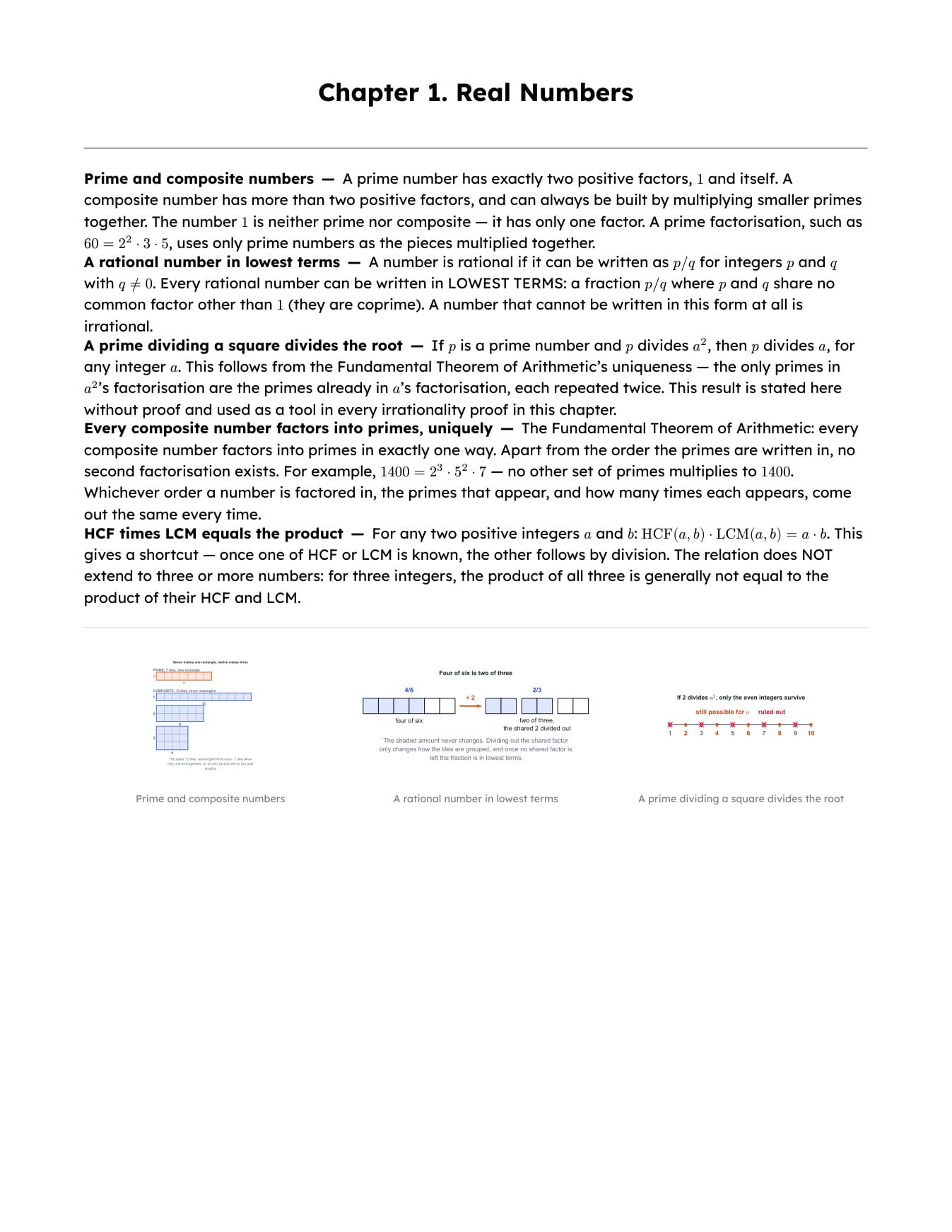
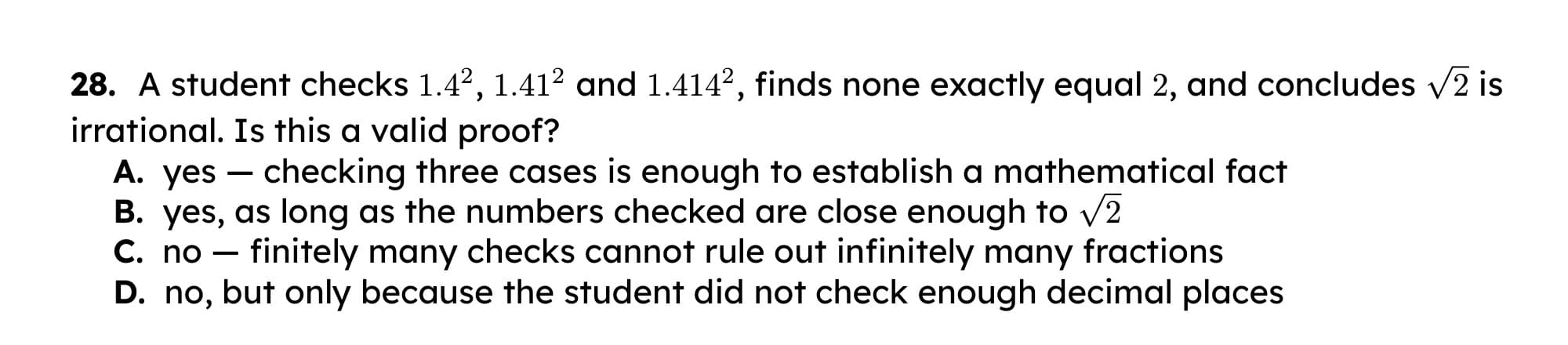
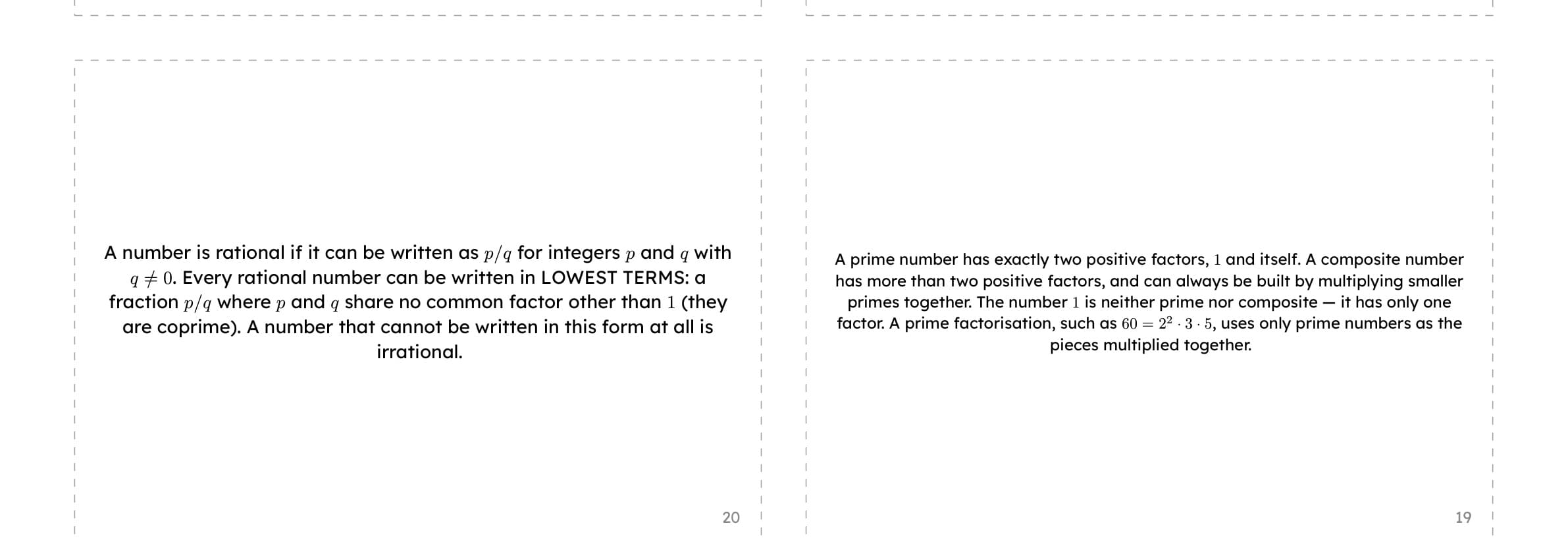
8 forms measured on 1 October 2026, from one Class 10 Mathematics chapter — the chapter that has reached the most forms today, not a typical one.
What a belt means
A belt sums up how far a learner has gone across an entire subject — not one topic, one quiz, or one score. Each subject keeps its own belt, and only the subject's core topics count toward it.
Only the subject's core topics count toward its belt — enrichment topics don't move it either way.
A belt never turns into a mark or a percentage. It stays a belt.
One complete lesson, end to end
Grade 7 Regression, the full adaptive path, own-AI investigations, local learner profiles, saved progress, progress that follows a signed-in learner to another device, real book-page links, and one topic (Adult Numeracy: Fractions to Algebra).
More topics, more languages and richer support for open answers are still to be built.
This chapter’s finished forms are counted just below.
A subject is written once, drawn once, and checked before anything ships. From that single checked source, the factory re-expresses it into every form a line needs.
Designed around understanding, not screen time
Adaptive from the first minute
A short placement check finds the lowest shaky idea. Strong learners skip ahead; stuck learners step back.
AI is a tool, not the teacher
Learners use the AI their family already has, then return to think with the examples they found.
Mastery requires transfer
Remembering facts can unlock the next topic. Full mastery needs applying the idea somewhere new.
Made for a shared phone
No login to start, one question per screen, several learners on one phone, and progress saved on that device.
The quickest way to understand the loop is to take the first question.
Try the live lesson →